
Photos & text by Ann Ferguson. Send corrections to treenurseryferg at gmail dot com.
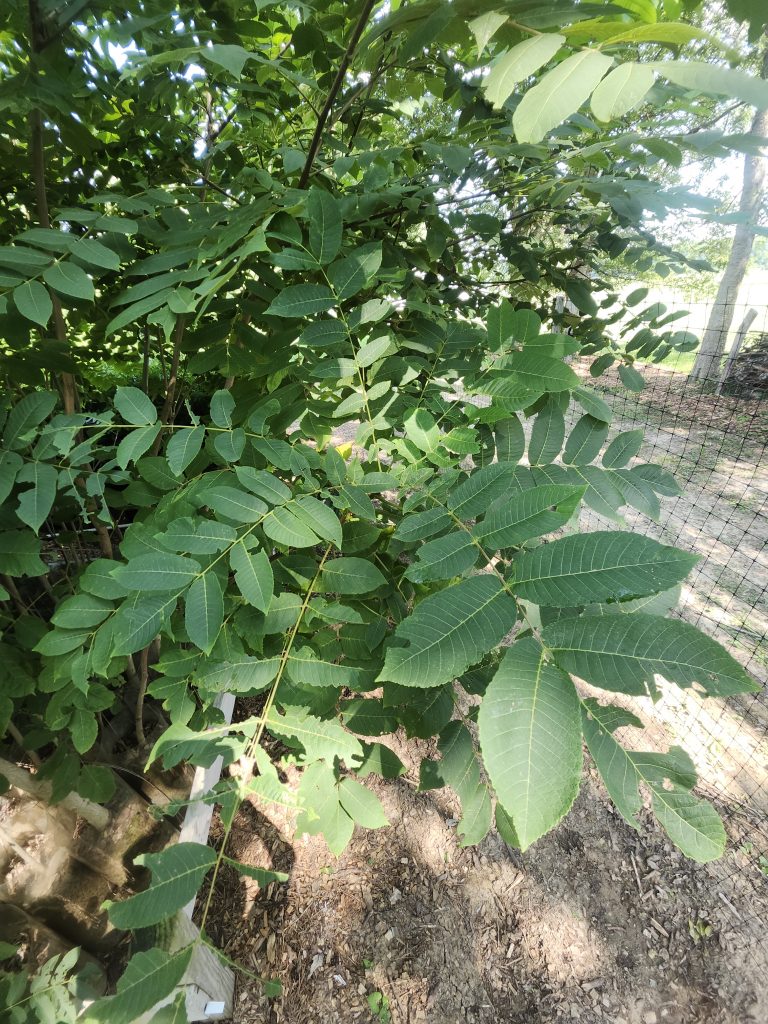
Butternut
Juglans cinerea & [Juglans ailantifolia x Juglans cinerea] x Juglans cinerea
Butternut (Juglans cinerea), is a medium-sized relative of the black walnut tree (Juglans nigra), uncommon throughout it’s range which extends farther north than the range of black walnuts. Butternuts are prized as food, with a sweeter, more buttery taste than the strong flavors of Juglans nigra.
Unfortunately over the last 60 years, already sparse butternut populations declined significantly and continue dying across their entire range from butternut canker disease, which is caused by a fungus. The fungus is believed to have arrived in southeast USA from elsewhere, although it was first reported in Wisconsin in 1967.
Butternut conservation research is ongoing, and the particular hybrid we carry in the nursery was developed at Purdue’s Hardwood Tree Improvement & Regeneration Center. It incorporates Juglans ailantifolia, the Japanese walnut, which has some resistance to butternut canker disease.
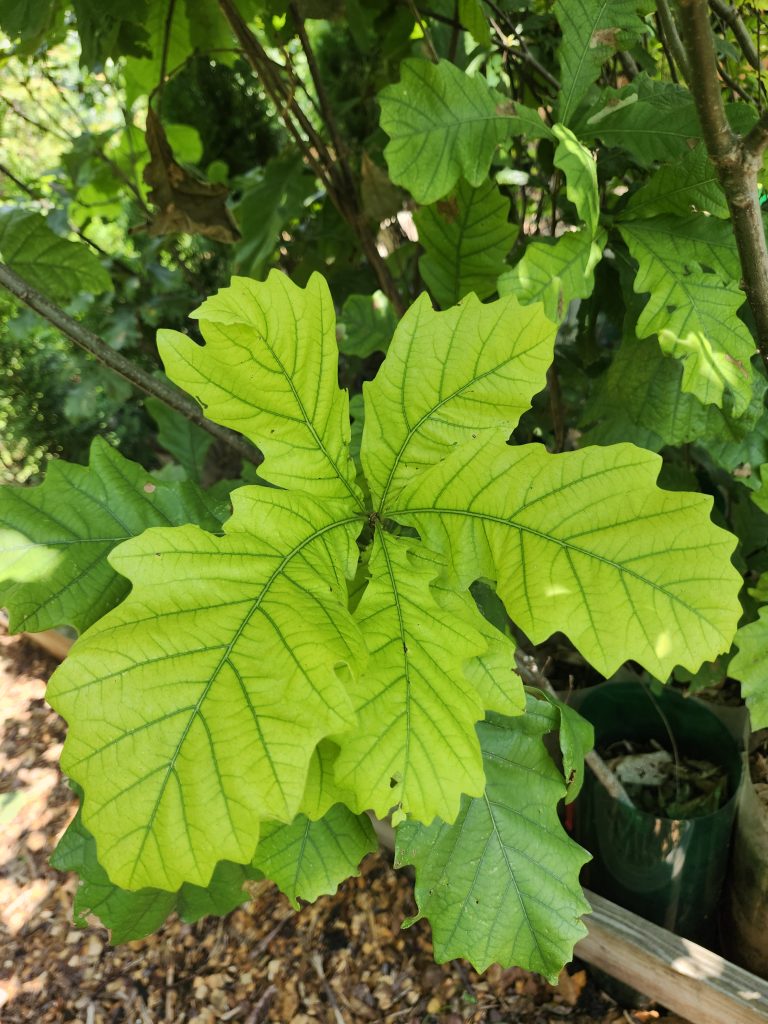
Concordia Oak
Quercus xintrogressa
A rare tree, the Concordia oak (Quercus xintrogressa) is a hybrid of dwarf chinkapin and chinkapin oaks pollinated by swamp white oak. It was described in 1974 when botanist Paul Thomson discovered it at a rest stop in Concordia, Missouri. There was only a small wild population which has since been destroyed, but a handful of locals have kept this tree alive in other locations.
It can be confusing to find information on Concordia oaks online, because a cultivar of the English oak is called Concordia (Quercus robur ‘Concordia’). We don’t carry those!
For more info and history, Ryan Russell with the International Oak Society has a two-part article on his search for true Quercus xintrogressa specimens at these links:
Part 1 Unraveling the Mystery of Quercus ×introgressa P.M. Thomson
Part 2 Unraveling the Mystery of Quercus ×introgressa P.M. Thomson – Part 2
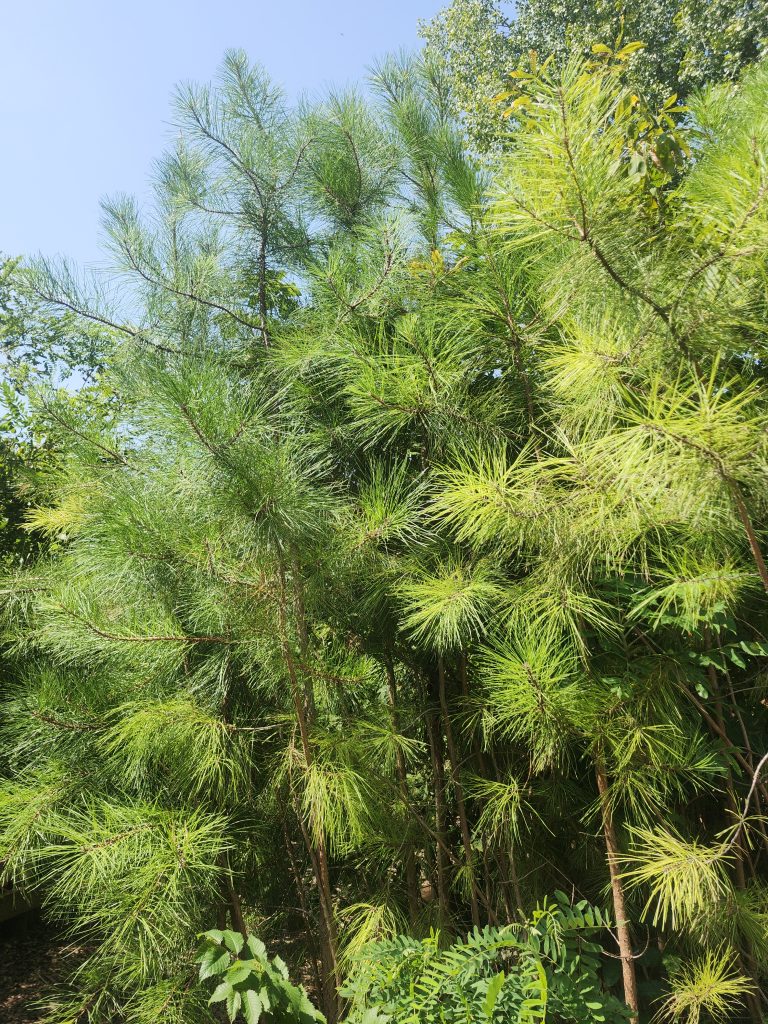
Pitch x Loblolly Pine (Pitlolly)
Pinus rigida x taeda
“Pitlolly pine, a hybrid of pitch pine (Pinus rigida) and loblolly pine (Pinus taeda), combines the cold hardiness, drought tolerance, and vigor of pitch pine with the larger mature size, heat tolerance, moist soil tolerance, straighter trunk, and vigor of loblolly pine.” –Ohio DNR website
The ranges of loblolly and pitch pines overlap in eastern USA, but diverge as pitch pines grow north toward Canada while loblolly pines grow south and west all the way to Texas. Loblolly pines can reach more than 100 feet tall; pitch pines grow up to 100 feet. Pitlolly pines are estimated to reach 60 feet.
We’ve begun recommending pitlolly pines as a strong heat and drought tolerant option for Southwest Indiana’s increasingly warm seasons. We’ve seen healthy, fast growth, and anecdotally, some tolerance for growing next to farm fields.
London Planetree
Plantanus x acerfolia ‘Columbia’, ‘Exclamation’, & ‘Bloodgood’
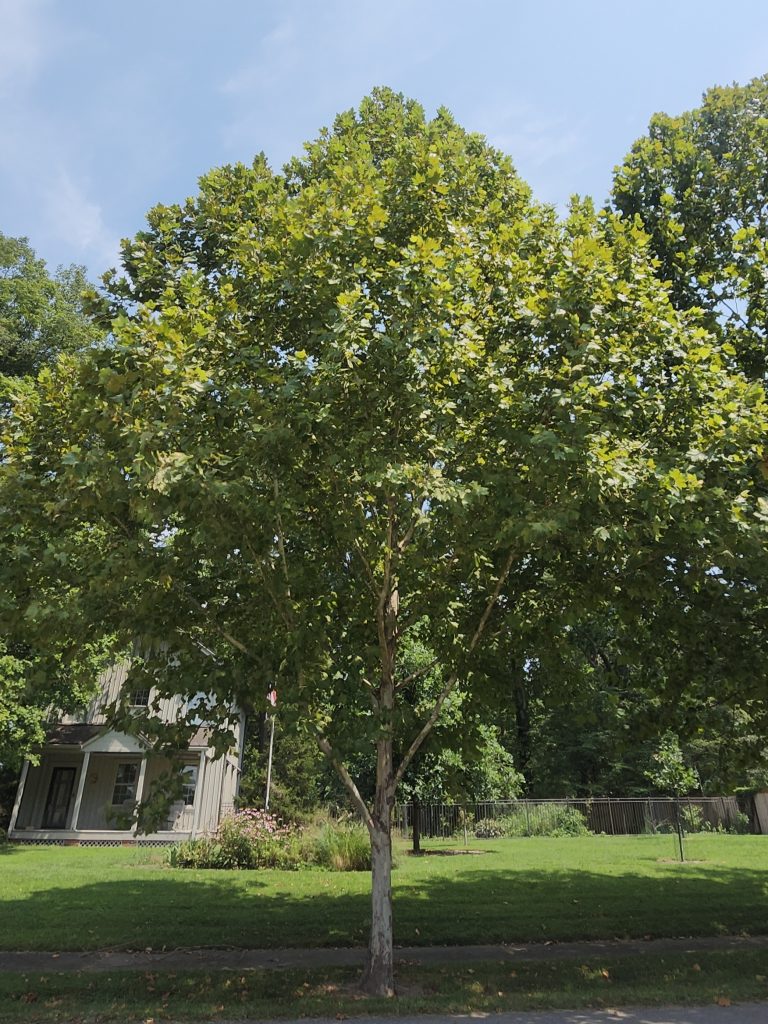
This is a famously cosmopolitan hybrid of American sycamore (Platanus occidentalis) from eastern North America and Plane Tree or Chinar (Platanus orientalis) from regions between the east coast of the Mediterranean Sea and Iran. The hybrid was first observed in the 1600s in Europe. They look very similar to the American sycamore, with differences in bark color and mottling, leaf shape, and arrangement of seeds.
The hybrid received the common name London Planetree, because it was planted in large numbers in public spaces in the city of London, England during the Industrial Revolution. The thin bark, prone to peeling, helped the trees survive airborne particulate pollution which coated all surfaces at the time. Today, Platanus x acerfolia makes up 5% of the public trees in London and is planted globally in many large urban places.
Several qualities make them strong candidates for planting along streets or around new construction despite their large size (up to 130ft): tolerance of heavy soil compaction, heat, and drought plus resistance to fungal anthracnose. We carry a mix of three hybrid cultivars all bred to resist anthracnose, but one also to resist mildew and one to resist frost cracking. Consider London planetrees for a highly compacted space in full sun.
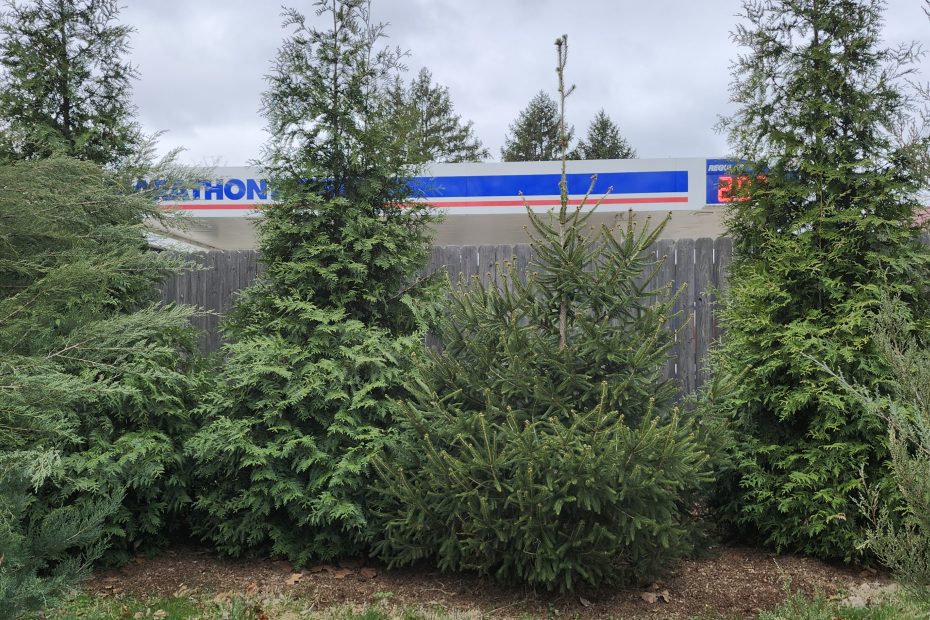
Green Giant Arborvitae
Thuja standishii x plicata ‘Green Giant’
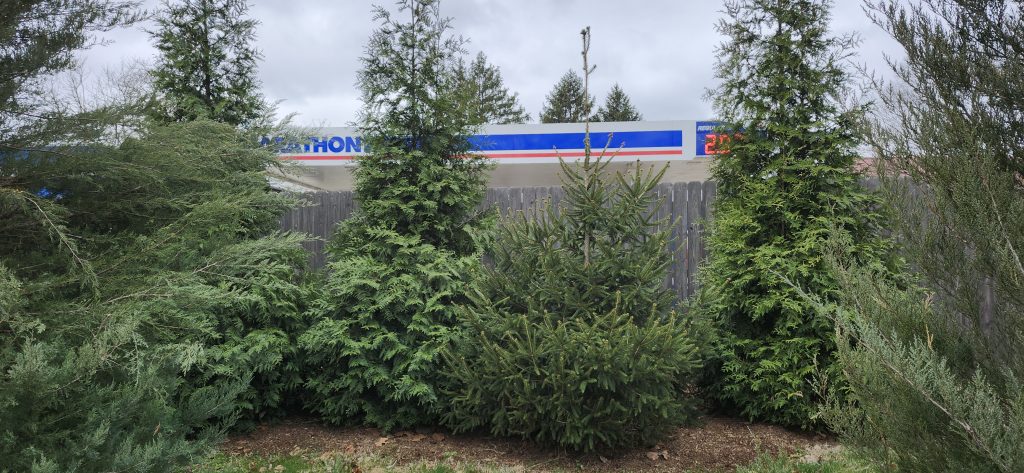
The US National Arboretum initially received this hybrid in 1967 from D.T. Poulsen Nursery in Denmark. It’s a combination of Western Red Cedar (Thuja plicata) from the North American Pacific Northwest which can reach 200+ feet and Japanese Thuja (Thuja standishii) from southern Japan which can reach 100+ feet.
The hybrid can grow 3 feet a year, reaching 60 feet tall and 12 feet wide, so it’s popular for installing fast-growing living hedges. It requires little maintenance once established and is not susceptible to many pests or diseases, but bagworm can kill an entire row of trees in one season. We encourage diversifying an evergreen hedge with a variety of species alongside Green Giant Arborvitae.
References:
Butternut Plant Guide, USDA NRCS National Plant Data Center & the Biota of North America Project
Species Review Juglans cinerea, USDA Forest Service Fire Effects Information System
Missouri Conservationist Magazine December 2008 issue
Ohio Department of Natural Resources Discover & Learn
American Sycamore (Platanus occidentalis) vs London Planetree (Platanus ×hispanica), bplant.org
EXCLAMATION!™ London planetree, The Morton Arboretum
The Secret History of the London Planetree, Ben Venables, Londonist
Thuja ‘Green Giant’ Plant Introduction, US National Arboretum
The History and Development of the Thuja Green Giant by Thuja Supply